天照大神に関する覚書
A Note on Amaterasu Omikami
Bottle No.4 草壁皇子と壬申の乱
はじめに
ここでは草壁皇子を中心に語らせていただきたいと思うのですが、この草壁皇子については、出生から死に至るまで、すべてが謎に包まれており、謎を解き明かすヒントすらほとんど残されていないという状態です。
そこで彼について語ろうとすれば、こう思う、こうではないか、こうかも知れない……と、残されたかすかな手掛かりをもとに、想像をたくましくするしかありません。
ご了解して一読いただければと思う次第です。
1. 草壁皇子の出生時期について
草壁皇子は、天智天皇元年(662年)、大海人皇子の第二皇子として誕生したと言われています。
しかし、662年というと、父親である大海人皇子(後の天武天皇)が、兄・中大兄皇子と共に百済救援のため前線基地である九州福岡へ出向している時期です。韓半島ではこの時期、新羅・高句麗・百済の三国時代が終わろうとしていました。隋を滅ぼした唐帝国は、中原を争う高句麗を制圧するために。そして新羅は百済を制圧し、半島を統一するために……。
ここに唐・新羅連合が成立し、新羅は巨大な唐の力を背景に百済に襲い掛かってくることになったのです。
百済からの救援要請に、時の斉明女帝は出兵を決意。天皇自ら、その子、中大兄皇子(後の天智天皇)、大海人皇子(後の天武天皇)の率いる2万7000の大軍とともに福岡へと向かったのです。
大海人皇子はこのとき、正妃・大田皇女を伴っており、出征途上の備前国大伯(岡山県倉敷あたり)で二人の間に大伯皇女が生まれたことになっております。661年2月12日(斉明7年1月8日)のことだと言われています。
さらに663年(天智2年)、那大津(現在の福岡県那津)おいて、大海人皇子と大田皇女の間に大津皇子が生まれ、その地名から大津皇子と名付けられました。
そして、その前年662年に草壁皇子が生まれたというのです。
草壁の母である鵜野讃良皇女(うののさららのひめみこ=以降は鵜野皇女と表記)は、大田皇女の妹であり、姉妹共に大海人皇子に嫁いでいますが、このとき鵜野皇女は、福岡の前線基地へはどうも同行していないようなのです。断言はできませんが、記録の上に彼女の気配や、草壁を産んだという気配すらありません。大伯皇女の誕生と言い、大津皇子の誕生と言い、出陣先での誕生の経緯が語られているのに、草津皇子の誕生については、いえ、それどころか鵜野皇女の存在すら片鱗も語られていないのです。
こう考えていくと、鵜野皇女は、飛鳥の都で留守居していたとしか考えられません。
つまり、662年には、どう考えても草壁皇子が生まれるはずがないのです。
では、いったい、彼はいつ生まれたというのでしょうか?
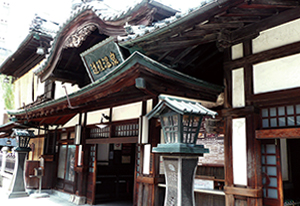
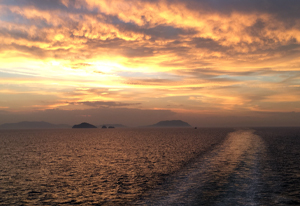
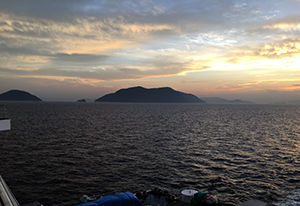
熟田津/道後温泉(愛媛県松山市) 九州を目前にした瀬戸内海/遠くに見える島影は周防大島近辺
2. 白村江の敗戦から近江遷都へ
少し話を戻しますが、斉明天皇らが百済を救援するべく難波津を出港したのは、661年1月6日のことだと言われています。以下は、中大兄皇子に同行した彼の愛人額田王が詠んだ短歌ですが、1月14日、九州へ向かう途上の熟田津(にきたつ)、今の道後温泉あたりで詠んだものだと言われています。
熟田津に船乗りせむと月待てば 潮もかなひぬ今は漕ぎ出でな
そして同じ年の2月12日、備前国大伯の海(今の岡山県倉敷の牛窓辺り)で、大田皇女が大伯皇女を出産。ここで静養のためしばらく滞在したものと思われ、
同年3月25日には、那大津(現在の福岡県那津)に入ったと思われ、5月には仮御所の朝倉橘広庭宮(あさくらのたちばなのひろにわのみや)に移り百済復興の戦に備えた模様です。
ただ旅の疲れからでしょうか、斉明女帝はその3か月後の8月24日に、白村江の敗戦を待たず、勝利の確信を胸に崩御されました。このため皇太子中大兄皇子は喪につき、その年の10月23日には、斉明天皇の亡骸が難波津に運ばれ、11月7日には飛鳥の川原で殯(もがり)されるというあわただしさで661年は終わりました。
明けて662年、斉明天皇崩御後も、中大兄皇子は即位しようとせず前線の総指揮官として百済救援の采配を以降も振ることになります。
この年、草壁皇子が誕生したというのですが、前章でも述べたように、福岡へは正妃・大田皇女が同行しており、草壁の母となる鵜野皇女がこの福岡に同行していたとは考えにくいのです。この年に草壁が生まれたというのは、後に、草壁が天武の皇太子即位にあたって後付けで設定された誕生年のように思われるのです。
そして663年10月の白村江での敗戦を迎えますが、この敗戦によって百済は完全に滅びることになり、そればかりか最悪の場合、唐・新羅連合軍による日本本土への侵攻が考えられます。このため中大兄皇子は、水城(みずき)、大野城、基肄城(きいじょう)といった防衛施設を築くなど、九州に防衛体制を急いで整え、更に前線基地である大宰府で残留指揮を執り、すぐさま防衛施設の強化を指揮したと思われます。そんな兄を助け、九州の体制を整えて、大海人皇子が飛鳥へ帰京したのは、翌664年に入ってからのことではないでしょうか。
新天皇の即位に当たって、その都も移るのが習わしのようになっており、近江京への遷都も当然と言えば当然ですが、滋賀という内陸部への遷都は、やはり唐・新羅の本土進攻を危惧してのことだったように思われます。
このため新京の造営も急がれ、3年後の667年4月には遷都するという早業です。こうして翌668年2月、中大兄皇子は新都にて即位し天智天皇が誕生するに至りました。
ここで本題に戻りますが、草壁皇子の誕生は、大海人皇子が帰京した664年から遷都までの早い時期ではなかったかと推測されます。
ただこの時点では、この歳の差は問題にはならなかったように思います。この歳の差が問題になってくるのは、大海人皇子が天武天皇となった時点、つまり草壁皇子をその皇太子にした時点、もっと言えば、その天武天皇が亡くなった時点から、この1歳差が「日本書紀」を改竄しなければならないような事態になってくるように感じられます。
一番早くて664年の秋以降の誕生、つまり大津皇子より1歳年上ではなく、逆の1歳年下ではなかったかと思うのです。
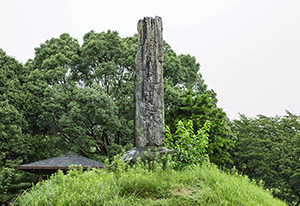
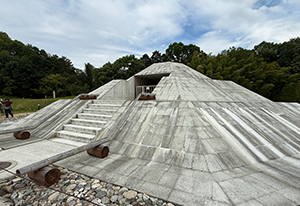
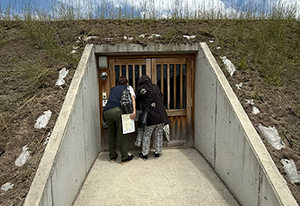
朝倉橘広庭宮(福岡県朝倉市) 斉明女帝と大田皇女が葬られたという牽牛子塚古墳(奈良県高市郡明日香村)
3. 壬申の乱
天智天皇即位と共に、大海人皇子が皇太子(皇太弟)となっています。
つまり、この時点では、次期天皇は皇太弟である大海人皇子ということになるはずでした。ところが、ここに天智天皇の子、大友皇子の存在が影を落とすことになります。
この時代、天皇には後継者を残すために複数の妻が存在していました。
それは律令制という制度にも定められていますが、まずは
① 皇后:天皇の正妻です。原則として一帝に一人とされていました。
② 妃: 4品(しほん、皇族の品位の一つ)以上の皇族の娘から2名置かれました。
③ 夫人(ぶにん):大臣以上の貴族の娘から3名置かれました。位階は三位に相当。
④ 嬪(ひん):四位以上の貴族の娘から4名置かれました。位階は四位に相当します。
この他にも飛鳥時代には、采女(うねめ)と言って、地方の豪族がその娘を天皇家に献上する習慣がありました。大友皇子の母は、伊賀采女宅子娘(いがのうねめやかこのいらつめ)、つまり、この采女にあたるわけで、皇族ではなく地方の豪族の娘ということなのです。
どういうことかというと、大友皇子は、天皇の後継候補がまったくないか、よほどのことがない限り皇位を継承できないということなのです。
天智天皇が皇位を継いだのは668年1月、40歳代すぐの頃だと思われます。皇位に着くまでの天智は、理が情に勝るタイプの人間のように思われます。が、皇位に就き、国内情勢も日本をめぐる国際情勢も一段落したかに見えるや、その安心感からか肉親の情に走るようになっていったように感じます。
天智は皇位に就いた3年後の671年12月3日に崩御しますが、その前年、史上初の太政大臣の位を設け、その位に我が子大友皇子を就けているのです。翌671年、病臥に伏すや、大海人皇子を枕元へ呼び寄せ後事を託したと言われています。この時、大海人皇子謀殺の計画があったと言われ、それを察した大海人皇子は、難を避けるように皇太弟の座を辞し、その場で出家し、吉野へ逃がれたと言われています。
天皇を取り巻く群臣や有力豪族の目から見ても、皇位継承順のトップは、文句なく大海人皇子であり、大友皇子が皇位に就くことは不自然に思われていたようです。このことは今の我々が考えるより、とても大事なことのようで、天智天皇亡き後、大海人皇子が兵をあげた時、周囲は誰もこれを反乱とはみなさず当然のことと受け止め、地方の豪族ばかりでなく、大津京の群臣の中からさえ大海人皇子に加担する人物が出てきたようです。
大海人皇子が吉野を脱出し東海を目指した時点では数十名に満たない一行が、瞬く間に万を超える軍団になっていくのを見ても、このことが分かると思います。
壬申の乱について語る余裕はありませんが、争いは大海人皇子の圧勝に終わり、大海人皇子は天武天皇として、大化の改新以来行われてきた、天皇中心の改革を断行していくことになります。
その際、天武天皇が頼りにしたのは、重臣や豪族ではなく、正室の鵜野皇后や高市皇子、大津皇子、草壁皇子らをはじめとする血のつながる子どもたちでした。しかし、これがかえって次の悲劇を生む引き金となっていきます。
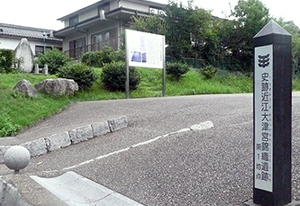
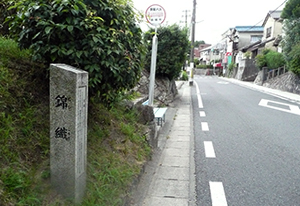
近江大津宮錦織遺跡(滋賀県大津市)
4. 天武帝の4人の子供たち
壬申の乱は、672年7月24日~8月21日の一カ月に満たない期間の戦いでした。
その経過をざっと見ておくと、以下の通りです。
7月24日、大海人皇子、吉野を脱出。
7月31日、大海人勢、美濃に入り、東国から参入した兵力を集め、軍勢を二手にわけて大和(旧都飛鳥をめぐる攻防)と近江の二方面に送り出した。
同日、近江方の軍勢も不破に向けて出陣。8月8日、息長の横河で戦端を開き、大海人勢は以後連戦連勝して箸陵(箸墓古墳)の戦いでの勝利を経て進撃を続ける。
8月20日、瀬田橋の戦いで近江朝廷軍が大敗。
8月21日、大友皇子が首を吊って自決し(24歳)、乱は収束。
乱終結時、天武の主な子供たちについて見てみると、大友皇子の正室となった十市皇女は19歳~24歳(推定)、大津皇子9歳、大津の姉・大伯皇女11歳、草壁皇子8歳? 壬申の乱一番の功労者・高市皇子は18歳と、みんな非常に若い。年長の高市皇子は壬申の乱の活躍ぶりが知られており、十市皇女も近江方・大友皇子の正室として知られていますが、年少者である大津皇子、大伯皇女、草壁皇子については、まるで記録がなく、乱の間、何処にかくまわれていたのか、また乱に同行したものか、全く不明なのです。
これは僕の勝手な想像ですが、高市皇子が大津京を脱出する際、彼は幼い3人をも共に連れ出していたのではないかと思います。助け出したものの、一刻を争い大海人皇子の軍に加わろうとする高市皇子は、足手まといになる3人を、旧都飛鳥京にかくまったのではないでしょうか? 飛鳥には、蘇我倉山田石川麻呂が建立しようとした「山田寺」があります。建立途上で謀反の罪で自害に追いやられ造営はストップしましたが、天智朝に再開されたようです。そして、この再開に草壁皇子の母、鵜野皇女が深くかかわっているように感じるのです。
高市皇子は、この山田寺に三人をかくまったうえで、大海人皇子に味方する大伴吹負(おおとものふけい)に飛鳥京の制圧を頼んだのではないでしょうか?
こうして飛鳥京は、大した抵抗もなく、難なく大伴吹負の制圧するところとなりました。
しかし、飛鳥を奪還しようとする近江側は、難波から大軍勢を向かわせ、数ではるかに劣る大伴吹負軍を圧倒します。これを知った大海人皇子は、軍を二手に分け、一隊を近江へ、一隊を難波から飛鳥を目指す軍勢を迎え撃つべく大伴吹負軍に合流させます。飛鳥をめぐる戦いは、葦池(現在は香芝市吉ケ池?)が決戦場となりましたが、徴募された近江軍の戦意は低く、ここでも、大伴吹負率いる大海人軍の圧勝となります。
こうして飛鳥京は戦火から守られた次第ですが、この飛鳥京をめぐっての争いの陰に、大海人皇子の幼い3人の子供たちの存在が感じられてなりません。
壬申の乱を生き抜いた天武の子供たち、なかでも高市皇子(18歳)が助けかくまった大伯皇女(11歳)、大津皇子(9歳)、草壁皇子(8歳)の3人。高市皇子を筆頭にこの4人の間に不思議な連帯感、一体感が生まれたことは想像に難くありません。
そして、この4人こそが、天武新体制のもと、天皇を助けた皇子、姫皇子たちであり、同時に天武帝亡き後、新体制維持の犠牲となっていった皇子たち、そしてその立役者となった柿本人麻呂なのです。
ということで、この続きは、Bottle.5「柿本人麻呂と古事記 そして天照大神」で語らせていただきます。
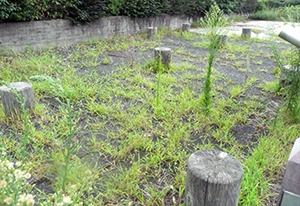
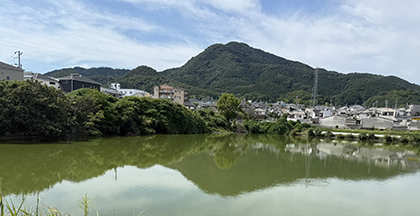
壬申の乱で飛鳥をめぐる闘いがあった芦池に比定される吉ケ池と千股池付近( 奈良県香芝市)
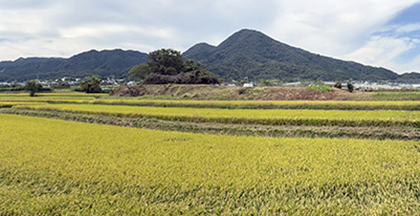
大伴吹負の軍が駐留したと言われる逢坂近辺
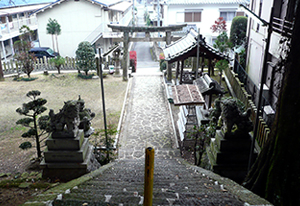
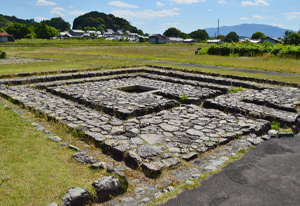
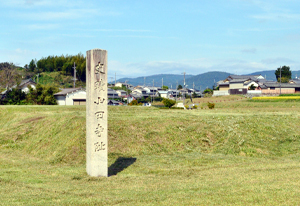
(奈良県香芝市)飛鳥浄御原宮跡 (奈良県高市郡明日香村) 蘇我倉山田石川麻呂ゆかりの山田寺跡
(奈良県高市郡明日香村)
Bottle No. 4 – Prince Kusakabe and the Jinshin Rebellion
Introduction
In this essay, I would like to focus on Prince Kusakabe.
Yet, everything about him—from his birth to his death—remains shrouded in mystery.
Hardly any concrete clues survive that might help us unravel his life.To speak of him, therefore, is to say, I think this may be so, or perhaps it was like this.
What follows is an attempt to piece together a portrait of Prince Kusakabe, relying on the few faint traces that remain and filling the gaps with reasoned imagination.
I ask for the reader’s understanding as you accompany me through this exploration.
1. The Birth of Prince Kusakabe
It is generally said that Prince Kusakabe was born in the first year of Emperor Tenchi’s reign (662 CE) as the second son of Prince Ōama, later Emperor Tenmu.
However, in 662 CE Prince Ōama was in Kyushu—at the frontline base in Fukuoka—together with his elder brother, Prince Naka no Ōe (later Emperor Tenchi), leading the expedition to rescue the fallen kingdom of Baekje.At that time, the Korean Peninsula stood at the close of its Three Kingdoms period—Silla, Goguryeo, and Baekje.
The Tang Empire, which had overthrown the Sui, sought to subdue Goguryeo, while Silla aimed to destroy Baekje and unify the peninsula.
Thus, the Tang–Silla alliance was formed, and backed by Tang’s overwhelming power, Silla launched its assault upon Baekje.Responding to Baekje’s plea for help, Empress Saimei decided to send troops.
She herself, accompanied by her sons—Prince Naka no Ōe and Prince Ōama—led an army of some 27,000 men to Fukuoka.Prince Ōama was joined by his principal consort, Princess Ōta.
It is said that while en route, at Ōhako in Bizen Province (around present-day Kurashiki, Okayama Prefecture), Princess Ōta gave birth to their daughter, Princess Ōku, on February 12, 661 (1st month 8th day of Saimei 7).The following year, in 663 (2nd year of Tenchi), while stationed at Natsuno-Ōtsu—modern-day Natsu in Fukuoka Prefecture—Princess Ōta gave birth to a son who was named Prince Ōtsu after that place.
It is said that the year before, in 662, Prince Kusakabe had already been born.
His mother, Princess Unonosarara (hereafter referred to simply as Princess Uno), was Princess Ōta’s younger sister; both sisters were married to Prince Ōama.
Yet Princess Uno seems not to have accompanied him to the Kyushu front.
There is no record—not even a passing mention—of her presence in Fukuoka, nor of any childbirth there.In contrast, the births of both Princess Ōku and Prince Ōtsu are clearly recounted, each with its setting and circumstances along the expedition route.
But for Prince Kusakabe there is complete silence—not only about his birth, but about his mother’s whereabouts at that time.From this, one can only conclude that Princess Uno remained behind in Asuka, serving as the guardian of the royal residence.
In other words, it seems impossible that Prince Kusakabe could have been born in 662.
When, then, was he actually born?
Nikitatsu / Dōgo Hot Spring
(Matsuyama, Ehime Prefecture)The Seto Inland Sea before reaching Kyushu / Distant silhouettes of islands near Suō-Ōshima
2.From the Defeat at Baekgang to the Move to Ōmi
Let us turn back the clock for a moment.
It is said that on January 6, 661, Empress Saimei and her court set sail from Naniwa Port to aid Baekje.
The following poem, composed by Nukata no Ōkimi—the beloved of Prince Naka no Ōe, who accompanied him on this campaign—was written on January 14, while their fleet waited for the tide at Nikitatsu (present-day Dōgo Hot Spring in Matsuyama, Ehime Prefecture):At Nikitatsu we wait for the moon
To embark upon our voyage—
Now the tide has turned,
Let us row forth.On February 12 of that same year, at Ōhako Bay in Bizen Province (around modern Ushimado in Kurashiki, Okayama Prefecture), Princess Ōta gave birth to Princess Ōku.
It seems the party stayed there for a while so that she could recuperate.By March 25, they had reached Natsuno-Ōtsu (today’s Natsu in Fukuoka Prefecture), and by May had moved to the provisional palace of Asakura Tachibana no Hiro-niwa, preparing for the campaign to restore Baekje.
Perhaps due to the rigors of the journey, Empress Saimei passed away on August 24—three months later—before the battle at Baekgang even took place. She died with full confidence that victory was near.
Crown Prince Naka no Ōe went into mourning.
Her remains were brought back to Naniwa Port on October 23 of that year and laid in temporary repose on the riverbank at Asuka on November 7.
Thus the year 661 came to a hurried close.When the new year of 662 dawned, Crown Prince Naka no Ōe still did not ascend the throne.
Instead, he continued to direct operations from the front as commander-in-chief of the Baekje restoration army.It is said that Prince Kusakabe was born in this year.
Yet, as noted in the previous section, Princess Ōta, Prince Ōama’s principal wife, had accompanied him to Fukuoka, while Princess Uno—the supposed mother of Kusakabe—appears nowhere in the records.
It seems unlikely that she was present at the Kyushu front.
Therefore, the birth year of 662 may well have been retroactively assigned later, when Prince Kusakabe was made crown prince under Emperor Tenmu.Then came the defeat at the Battle of Baekgang in October 663.
Baekje was utterly destroyed, and there arose the real fear that the Tang–Silla allied forces might invade the Japanese homeland next.
To prepare for this, Crown Prince Naka no Ōe ordered the rapid construction of defensive fortifications—Mizuki, Ōnojō, and Kii Castle among them—and remained in Dazaifu to oversee their reinforcement.
Assisting his brother in stabilizing Kyushu’s defenses, Prince Ōama likely returned to Asuka only after the situation had settled, probably in early 664.It had become customary for a new emperor to establish a new capital upon accession, and thus the transfer of the capital to Ōmi was a natural step.
Still, moving to Shiga—deep inland—seems to have been a precaution against possible invasion from Tang and Silla.
Construction of the new capital proceeded at remarkable speed, and by April 667 the move was completed.In February of the following year, 668, Prince Naka no Ōe ascended the throne as Emperor Tenchi.
Returning now to our main subject:
Prince Kusakabe was likely born not in 662 but sometime between Prince Ōama’s return to Asuka in 664 and the subsequent transfer of the capital.
At the earliest, his birth would have been in the autumn of 664—making him not one year older but rather one year younger than Prince Ōtsu.At that stage, such a difference in age probably carried little significance.
Yet it would later become a matter of consequence—when Prince Ōama ascended as Emperor Tenmu and named Kusakabe his crown prince, and even more so after Emperor Tenmu’s death—forcing later compilers of the Nihon Shoki to revise the chronology to preserve imperial legitimacy.
Asakura Tachibana no Hiro-niwa Palace
(Asakura City, Fukuoka Prefecture)Kengoshizuka Kofun — said to be the burial site of Empress Saimei and Princess Ōta
(Asuka Village, Takaichi District, Nara Prefecture)
3. The Jinshin Rebellion
When Emperor Tenchi ascended the throne, Prince Ōama was named Crown Prince (more precisely, Crown Younger Brother ).
At that point, there should have been no doubt that the next emperor would be Prince Ōama.However, the presence of Emperor Tenchi’s son, Prince Ōtomo, cast a long shadow over this succession.
In those days, emperors customarily had multiple wives in order to ensure the continuity of the imperial line.
The structure was even codified in the early ritsuryō system.
It defined the ranks of imperial consorts as follows:
- Kōgō (Empress) – the principal wife of the emperor; in principle, there was only one.
- Hi (Consort) – up to two, chosen from imperial princesses of the fourth rank (shihon) or higher.
- Bunin (Lady) – up to three, chosen from the daughters of ministers or nobles of the third rank.
- Hin (Concubine) – up to four, chosen from the daughters of nobles of the fourth rank or above.
In addition to these, during the Asuka period, there was a practice in which provincial chieftains offered their daughters to the court as uneme (court attendants).
Prince Ōtomo’s mother, Iga no Uneme Yakako no Iratsume, was one such uneme—a woman of provincial noble birth rather than of imperial lineage.
This meant that her son Ōtomo, though the emperor’s child, stood far down the line of succession and could not rightfully inherit the throne unless extraordinary circumstances arose.Emperor Tenchi ascended in January 668, likely in his early forties.
Until then, he seems to have been a man guided more by reason than by emotion.
Yet once enthroned—and as the domestic and international situations around Japan temporarily stabilized—he appears to have relaxed his vigilance and grown more sentimental toward his own kin.Three years later, on December 3, 671, Emperor Tenchi passed away.
The previous year, he had created the post of Daijō Daijin (Chancellor of the Realm)—the first in history—and appointed his son Ōtomo to that position.
In 671, when he fell gravely ill, he summoned Prince Ōama to his bedside and entrusted him with the affairs of state.
However, according to tradition, a plot to assassinate Prince Ōama had already taken shape.
Sensing the danger, Prince Ōama renounced his position as Crown Prince on the spot, took Buddhist vows, and fled to the mountains of Yoshino.To the courtiers and powerful clans surrounding the throne, the rightful successor was clearly Prince Ōama.
It seemed unnatural that Ōtomo—whose mother was not of imperial blood—should ascend instead.
This perception, more significant than modern readers may imagine, explains why, after Emperor Tenchi’s death, when Prince Ōama raised troops, few regarded it as rebellion.
Rather, it was seen as an inevitable correction of order.
Supporters rallied not only from provincial clans but even from within the court at Ōtsu itself.When Prince Ōama left Yoshino and began his march eastward, his party numbered fewer than a hundred.
Yet in a matter of days, it swelled into an army of tens of thousands—proof of how widespread the sympathy for his cause was.There is no need here to recount the detailed course of the Jinshin Rebellion.
Suffice it to say that it ended in Prince Ōama’s overwhelming victory.
He ascended the throne as Emperor Tenmu and carried out sweeping reforms—centralizing power around the emperor in continuation of the Taika Reforms.In doing so, Emperor Tenmu relied not so much on senior courtiers or powerful nobles, but on his own family: his empress, Uno no Sarara (later Empress Jitō), and their sons—Prince Takachi, Prince Ōtsu, and Prince Kusakabe.
Yet this very reliance on blood ties would, in time, become the seed of the next tragedy.
Site of the Ōmi Ōtsu Palace at Nishikori (Ōtsu City, Shiga Prefecture)
4. The Four Children of Emperor Tenmu
The Jinshin Rebellion lasted less than a month—from July 24 to August 21, 672 CE.Its course, in brief, unfolded as follows:
- July 24: Prince Ōama escaped from Yoshino.
- July 31: His forces entered Mino Province, gathered troops from the eastern regions, and split into two armies—one directed toward Yamato (the old capital of Asuka), the other toward Ōmi.
That same day, Ōmi’s forces also marched out toward Fuwa.- August 8: The first battle was fought at Yokokawa in Omi’s Osagano region. Prince Ōama’s troops won successive victories thereafter, including the Battle of Hashiraka (near the Hashihaka Kofun), pressing their advance.
- August 20: The Ōmi court army suffered a crushing defeat at the Battle of Seta Bridge.
- August 21: Prince Ōtomo took his own life by hanging at the age of twenty-four, and the rebellion came to an end.
At the time of the rebellion’s conclusion, Emperor Tenmu’s principal children were still very young.
Princess Tōchi, who had become the wife of Prince Ōtomo, was about nineteen to twenty-four years old.
Prince Ōtsu was nine, his elder sister Princess Ōku was eleven, and Prince Kusakabe perhaps eight.
The eldest among them, Prince Takachi, was eighteen and distinguished himself in battle during the rebellion.
Princess Tōchi is remembered as Prince Ōtomo’s consort on the Ōmi side, but as for the younger ones—Ōtsu, Ōku, and Kusakabe—no records exist.
We know neither where they were sheltered during the conflict nor whether they accompanied the campaigns at all.Here I must indulge in speculation.
When Prince Takachi fled from the capital at Ōtsu, might he have taken these three young children with him?
If so, once they were safely out, and with no time to lose before joining his father’s army, he may have hidden the children somewhere secure—perhaps in the old capital of Asuka.In Asuka stood Yamada-dera, a temple originally commissioned by Soga no Kurayamada Ishikawa no Maro.
Construction had been halted when its founder was forced to commit suicide under charges of treason, but the project was later resumed during Emperor Tenchi’s reign.
I sense that this resumption was closely connected with Princess Uno, Prince Kusakabe’s mother.It may be that Prince Takachi hid the three children at Yamada-dera and entrusted the defense of Asuka to Ōtomo no Fukei, a general loyal to Prince Ōama.
As a result, Asuka was captured with little resistance—almost effortlessly.
However, the Ōmi forces, determined to retake the old capital, sent a massive army from Naniwa.
They vastly outnumbered Ōtomo no Fukei’s troops and soon overwhelmed them.
Learning of this, Prince Ōama divided his forces: one to continue the advance toward Ōmi, and another to join Fukei’s army to repel the enemy approaching Asuka from Naniwa.The decisive battle over Asuka was fought at Ashiike—perhaps the present-day Yoshigaike Pond in Kashiba City.
The conscripted Ōmi soldiers were poorly motivated, and once again, Ōtomo no Fukei’s troops, fighting under Prince Ōama’s banner, won a sweeping victory.Thus, Asuka was spared the ravages of war.
Yet behind these struggles for the old capital, one cannot help but sense the hidden presence of Prince Ōama’s three young children.These were the children who survived the Jinshin Rebellion:
Prince Takachi (eighteen), who protected and concealed them; Princess Ōku (eleven); Prince Ōtsu (nine); and Prince Kusakabe (eight).
It is not difficult to imagine the deep bond of unity that grew among the four of them through those perilous days.And it was these four—bound by that shared experience—who would go on to support Emperor Tenmu’s new order as the princes and princesses of the restored imperial line.
Yet they were also the ones who, after his death, became the sacrifices demanded to preserve that very system.
Area around Yoshigaike and Chimataike Ponds — identified with Ashiike, the site of the Battle for Asuka during the Jinshin Rebellion
(Kashiba City, Nara Prefecture)
Ōsaka area — believed to have been the
encampment of Ōtomo no Fukei’s forces
(Kashiba City, Nara Prefecture)Site of the Asuka Kiyomihara Palace
(Asuka Village, Takaichi District, Nara Prefecture)Ruins of Yamada-dera Temple, associated with
Soga no Kurayamada Ishikawa no Maro
(Asuka Village, Takaichi District, Nara Prefecture)
Thus concludes this account.
The continuation of this story will appear inBottle No.5: “The Children of Emperor Tenmu and the Sun Goddess Amaterasu.”