卑弥呼に関する覚書
Notes on Himiko
Bottle No.4 日本における卑弥呼の足取り
1. 邪馬台国東漸卑弥呼と言えば邪馬台国、邪馬台国と言えば、それが何処にあったかという「邪馬台国論争」が盛んです。
なぜ盛んなのか、答えが出ないし、歴史学会でも答えを出さない、というか出せないのが現状。
歴史学に名をはせた学者先生は、その多くが「4世紀以前には手を出さない」という姿勢をとり、「邪馬台国論争」はアマチュアが参戦できる聖地となり、しかも各地に邪馬台国を感じさせる遺跡が点在する。
こうして邪馬台国論争は、「魏志倭人伝」という唯一残された記録をめぐって、唐音での解釈、呉音での解釈までが入り混じっての泥沼状態?
そこで「魏志倭人伝」が邪馬台国の位置について正確な情報を与えてくれないのなら、いったんはそこから離れて、前後の状況、当時の状況から考えていくのが筋だと思います。僕が敬愛する田池先生、この先生は歴史畑の方ではなく、常々、人間は、「肉体は仮のもので、その心こそが本物」と伝えてこられました。その田池先生にしても「邪馬台国は奈良」ということを口にしておられましたし、我が歴史学の恩師でもある大庭脩先生、この方は東洋史の研究者でありますが、この方も「卑弥呼は大和に眠るか」という総合研究誌の著者であり、全体の監修者でもありますが、邪馬台国=畿内説をとっておられます。 僕自身は、「邪馬台国がどこであっても関係ない」等と思っていましたが、先に紹介した田池先生に勧められるままに「卑弥呼」について調べることになり、調べが進むうち、「邪馬台国は奈良であり、同時に北九州でもある」という思いが強くなってきました。
卑弥呼は、黄巾の乱を逃れ日本へ亡命した中国人、しかも南方の人間だという思いを強くしたからです。 南船北馬の言葉通り、中国南部は、韓国・日本を含む東アジア文化圏の海のネットワークを形成した国です。
Bottleの2と3で触れた中国での黄巾の乱。これによって、民間信仰だった「道教」が体系化していきますが、それを推進したのが、黄巾の乱を起こした「太平道」であり「五斗米道」という団体なわけです。「儒教」が女性を蔑視するのとは真逆に、「道教」では、女性の力を重視する立場をとっており、後にはカリスマ的な女性道士も多く誕生してくるという土壌を持っていました。
先に、古代史の世界では、日本にせよ、韓国にせよ、中国にせよ、女性が史資料に登場するケースが極めてまれで、その原因に思いあぐねている旨を述べましたが、調べてみれば、これらの国で儒教色が色濃くなっていったせいでした。その分、道教色は土に水がしみこむように、その土地の文化にしみこみ、風土と一体となって、表面へ出てくるのは儒教的側面ばかりとなっていったようです。
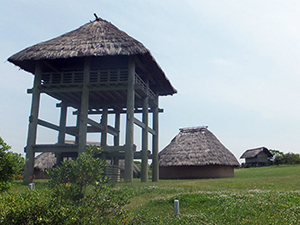
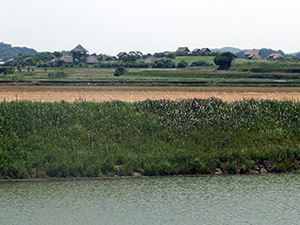
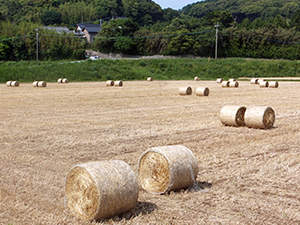
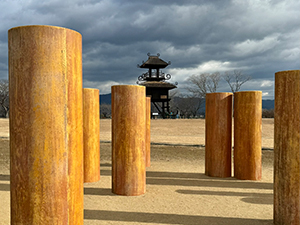
壱岐島 原の辻遺跡(長崎県) 原の辻遺跡遠望 壱岐島は全国でも有数の穀倉地帯でもある この道教的風土こそが「卑弥呼」を生み出した土壌だと思うのです。そして、 黄巾党の一部は、飢饉、戦乱、疫病の渦巻く中国を離れ、あらたなユートピアを造るべく、渤海湾・黄海ネットワークとでもいうべき海のルートで日本を目指し中国を後にしました。
何度も言いますが、卑弥呼が単独で日本に避難してきたわけではなく、卑弥呼は守られるべき中心的な存在として、黄巾党あるいは五斗米道の武装団体および農民たちとともに、中国の青州(五斗米道の拠点と思われます)から船団を組んで、壱岐、北九州、出雲、吉備、瀬戸内海を経て畿内へ来たと考えられないでしょうか。
そして、 その道中の主な地点で大規模な集落が営まれ、これが邪馬台国の土壌になっていった。いわば「邪馬台国東漸説」とでも言うような感じだったように思えるのです。畿内に入ってからは「唐子・鍵遺跡」が特に有名ですが、ここは纏向に入る前のテスト的な集落運営ではなかったか? 学者先生方の言われるように、「唐子・鍵集落は、ある時点で中心的な一団が突然消え去り、影響力のある中心的集落から普通の一般集落になっていった」。そして時期を同じくして、奈良の纏向に強大な集落が運営されるようになった。これが、最終的な邪馬台国になっていったのだと思う次第です。
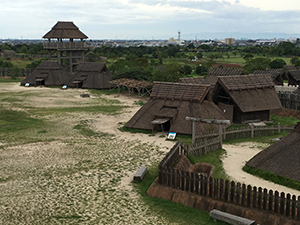
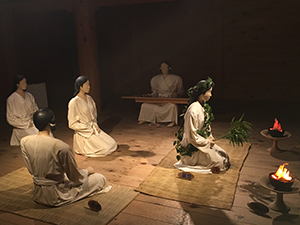
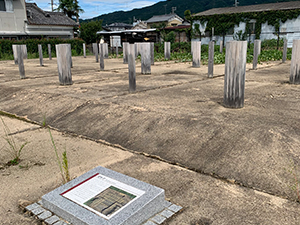
吉野ヶ里遺跡(佐賀県) 巫女王による神託の様子(吉野ヶ里遺跡) 唐子・鍵遺跡(奈良県田原本)
2. 卑弥呼と日本の起源
「卑弥呼」というと、日本の古代史から遊離した別格な存在、そんなイメージが強いわけですが、そんな訳はありません。卑弥呼は、2世紀後半から3世紀にかけて生きた、カリスマ性はあっても、決して宇宙人ではない、一人の女性です。
彼女を日本の古代史に位置づけるのを困難にしているのは、明治に制定された「紀元節」、つまり日本の始まりは「紀元前660年2月11日」という考え方です。この考えで行くと、卑弥呼の存在した時代に混乱が生じ、卑弥呼の存在自体が宙に浮いてしまいます。
そこで、Bottle1の復習になりますが、まず日本の起源がどうして決められたのかというところから簡単に見ていきます。推古天皇の時代に、中国から暦が伝えられました。十干・十二支、これに「木・火・土・金・水」の五行を配して60通りの組み合わせを作ります。60進法の考え方です。
60年で暦が一巡りするので、これを「還暦」として祝います。
その暦の考え方の中に、十干つまり甲乙丙丁ですが、これの8番目の辛、そして十二支の10番目の酉が組み合わさった「辛酉(かのととり)」の年。これも60年に一度回ってきますが、この「辛酉の年」は変革が起こる年だと言う「辛酉革命説」という考え方があります。60年に一度、これを「元」と言いますが、これが21回、つまり60×21元=1260年には、大変革が起こると言います。
推古天皇の時代、暦が伝わった年も辛酉の年にあたりました。それで、この年から1260年さかのぼった、紀元前660年2月11日を日本が誕生した日にしようということになったのです。ここに代々いる天皇を当てはめていったので、100歳を超える長寿の天皇が多く誕生することになってしまいました。
こうして、まずは日本の始まりが理論上の架空のものだということを分かったうえで、日本誕生の年を改めて考えていきましょう。
そこで中国の記録(後漢書)に残る「日本から中国への遣使」がいつだったか、これを見ていくと、どうも1世紀の半ばあたりに、日本に統一政権が誕生したのではないかとなってくるのです。
この考えをもとに、卑弥呼がどの天皇(大王)の時代に位置するのかを見ていくことにしましょう。
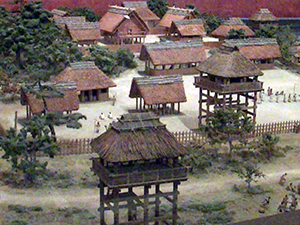
邪馬台国と言われる纏向遺跡(奈良県桜井市) 邪馬台国復元模型(大阪府弥生文化館) 卑弥呼の墓と言われる箸墓古墳
(奈良県桜井市)
3. 卑弥呼と孝霊天皇
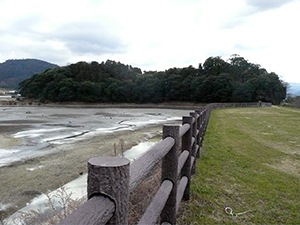
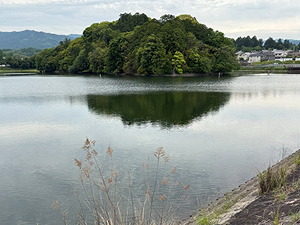
橿原ロイヤルホテルのすぐ近くに丈六の交差点がありますが、この交差点から東へ500メートルほど行ったところに「剣池(つるぎいけ)」があり、この池に浮かぶように見えているのが「孝元天皇陵」です。第8代の天皇であり、卑弥呼の男弟ではないかという説があります。
しかしBC660年を日本の起源とする説では時代が全く違い、問題になりません。
でも日本の始まりが1世紀半ばとすると、あながち間違いとは言えなくなってきます。そこで歴史の鉄則に従って、問題になる「孝元天皇」から更に時代を遡ってみましょう。
「孝元天皇」の前の代というと、第7代天皇が孝霊天皇であり、第6代が孝安天皇、そして第5代が孝昭天皇と、4代続いて「孝」という字が付く天皇が続きます。そこで第5代孝昭天皇までを、まず遡ってみましょう。陵墓、つまり古墳ですが、これは天皇陵だけあって、宮内庁が管理しており、正しいかどうかは別として、整備されているのですぐに見つかります。すると「5代孝昭天皇」および「6代孝安天皇」は、陵墓も御所跡も、ともに奈良県御所市(ごせし)に存在します。「初代神武天皇」にしても、今の橿原神宮でなく、御所市(ごせし)柏原(かしはら)に神武天皇社がありますし、「2代綏靖(すいぜい)天皇」の御所跡も御所市(ごせし)にあって、どうも初期の「都」は御所市の急峻な丘陵地帯に造営されていたようです。
御所市(ごせし)は米どころとしても有名ですし、丘陵地帯から市内に至る田園地帯こそ、「瑞穂(みずほ)の国」あるいは「秋津洲(あきつしま)」と呼ばれた一体であり、大和の国は、この丘陵地帯からスタートしたのは間違いがないようです。ところが、「第7代孝霊天皇」の代になって、この丘陵地帯から突然平野部に「都」が造営されるようになったのです。御所跡は、奈良県磯城郡田原本町、御陵跡も奈良県北葛城郡王寺町と、いずれも平野部に移され、次の「8代孝元天皇」に至って、橿原市に都(軽境原宮)が造営されるようになってきます。今の場所でいうと、近鉄電車の「橿原神宮駅」から飛鳥寄りの次の駅「岡寺駅」のすぐ近くの踏切に「軽境原宮跡(かるのさかいばらのみやあと)」の碑が立てられています。
話を戻しますが、「第8代孝元天皇」が「卑弥呼」の男弟という説がありました。そして7代の孝霊天皇の代になって、突如、急峻な丘陵地帯から平野部に「都」が造営されるようになった。平野部に都が造営されるというのは、敵に襲われる心配がなくなったか、あるいは攻められても、それを凌駕できる軍事力が用意されているかのどちらかです。平野部への進出は、「倭国大乱」と言われた争乱が静まったとしか考えられません。そして田原本(唐子・鍵集落)から橿原へ進出し、卑弥呼の館がある纏向の集落が造営されるようになりましたた。結論になりますが、第7代孝霊天皇が、卑弥呼が率いる中国からの集団(軍事集団・技術集団)を、卑弥呼を養女に迎えるという形で吸収したように思われます。結果、孝霊天皇は、世に伝えられる「疫病や反乱を収めるのに重要な役割を果たした倭迹迹日百襲姫命(やまとととひももそひめのみこと)を得た」ということになります。つまり、その後、カリスマ的な力を発揮する「倭迹迹日百襲姫命」こそ、疫病・飢饉・争乱の蔓延する中国から黄巾軍に守られ避難してきた卑弥呼だったと思えるのです。
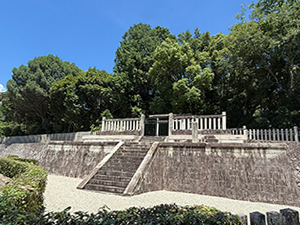
第6代 孝安天皇の陵墓
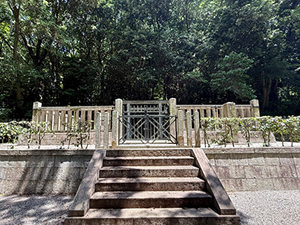
(奈良県御所市)第7代 孝霊天皇の陵墓
(奈良県北葛城郡王寺町)第8代 孝元天皇の陵墓
(奈良県橿原市)
秋津洲(あきつしま)と呼ばれた御所市の穀倉地帯
4. 卑弥呼の時代と心の学び
これ以降、卑弥呼とその一団は、大和に「まほろばの国」を造り出すため、代々の天皇を助けることになります。
東アジアには例のない巫女集団をつくりだしたのも彼女の仕事だったように思えるのです。
そして、田池留吉氏が提唱した「心の学び」。この学びに集った多くの人たちが、この卑弥呼の国づくりに携わったように感じています。
数限りない転生の中で、幾度か節目となるような転生があったと思うのです。少なくとも、今世、日本に転生し田池留吉と出会った僕たちにとって、日本の始まりは、大きな節目だったし、この500年後、天武天皇の後を継いだ持統女帝の「天照大神」を中心とした国づくりにも、多くの方が転生され行をともにしたように感じます。
戦いに傷つき、それぞれが悲惨な心の傷を負うことになりますが、それでも今世の転生につながる時代、あの時代があったからこそ、今世、田池留吉氏の呼びかけに集えた、そんな思いがフツフツと湧いてきます。数限りない転生の中で、節目となる転生、節目となる出会い、次に節目となるのは250年後となるのでしょうか。
Notes on Himiko: Bottle No.4
— Tracing Himiko's Footsteps in Japan
1. The Eastward Expansion of Yamatai
Mention Himiko, and people immediately think of Yamatai. Mention Yamatai, and the conversation turns to the ongoing "Yamatai Controversy": where exactly was this ancient kingdom located?
Why has this debate persisted for so long? Because no clear answer has emerged, and the academic world of history has largely avoided—or been unable to provide—any definitive conclusion. Many renowned historians refrain from addressing anything before the 4th century. As a result, the debate over Yamatai has become a sacred ground where amateurs can also participate freely. Adding to this, there are numerous archaeological sites across Japan that evoke the presence of Yamatai.
Thus, the Yamatai Controversy has become a tangled mess of interpretations based on the "Records of the Wei Commandery on the Wa People," the only surviving historical source. These interpretations vary depending on whether one reads the Chinese characters using Tang pronunciations or Wu pronunciations, leading to even further confusion.
If this sole record is unable to provide accurate information on Yamatai's location, then perhaps we should step back and examine the broader context of the times—the historical circumstances before and after the period in question.
I hold deep respect for my mentor, Taike, who was not a historian but consistently taught that "the physical body is temporary; it is the heart that is real." Even he once remarked, "Yamatai was in Nara." Another mentor of mine, Professor Osamu Oba, a specialist in East Asian history, wrote a comprehensive research volume titled Does Himiko Sleep in Yamato?, in which he supervised the entire work and also supported the theory that Yamatai was located in the Kinai region.
As for me, I used to think, "It doesn't matter where Yamatai was." But, encouraged by Professor Taike to look into Himiko, I began researching and gradually came to believe that Yamatai was both in Nara and in northern Kyushu.
This belief arose from my growing conviction that Himiko was a refugee from China—specifically from the south—who fled the chaos of the Yellow Turban Rebellion. The southern regions of China were integral parts of a maritime network that included Korea and Japan, forming a vast East Asian cultural sphere.
As I discussed in Bottles No.2 and No.3, the Yellow Turban Rebellion marked a turning point in China. Out of it, the folk religion of Daoism began to be systematized and institutionalized. The key movements behind this development were the Way of Great Peace (Taiping Dao) and the Five Pecks of Rice movement (Wudoumi Dao), which were responsible for the uprising.
Unlike Confucianism, which devalues women, Daoism emphasized feminine power and later gave rise to many charismatic female sages and priests. In my earlier notes, I pointed out how rarely women appear in historical records of ancient Japan, Korea, and China—and upon closer examination, this scarcity is due to the deep-rooted influence of Confucian values. Meanwhile, Daoism seeped into local cultures like water into soil—deeply absorbed but rarely surfacing. Thus, only the Confucian aspects became visible on the surface.
I believe this Daoist cultural climate was precisely the soil in which "Himiko" was born.
Some members of the Yellow Turban movement fled famine, war, and plague in China, and sought to build a new utopia. They took to the seas, navigating the maritime routes across the Bohai Sea and the Yellow Sea, aiming for Japan.
Harunotsuji Site, Iki Island (Nagasaki Prefecture) Distant View of the Harunotsuji
Archaeological SiteIki Island is also one of Japan's leading
grain-producing regionsI want to emphasize again: Himiko did not flee to Japan alone. She was a central figure—someone to be protected—and likely traveled as part of a fleet that included armed factions from the Yellow Turban or Wudoumi Dao movements, along with farming communities. They probably departed from Qingzhou, a suspected stronghold of the Wudoumi Dao, and made their way through Iki, northern Kyushu, Izumo, Kibi, and the Seto Inland Sea before finally reaching the Kinai region.
At key locations along this route, large settlements emerged—these became the foundations of what we know as Yamatai. In this sense, we might even speak of an "Eastward Expansion of Yamatai."
Once in the Kinai region, the Karako-Kagi archaeological site stands out. I suspect this was a kind of pilot settlement—an experiment before entering the more significant Makimuku area. According to some scholars, the Karako-Kagi site was once the center of a powerful group, but at some point, its core population suddenly vanished, and the settlement was reduced to a more ordinary village. Around the same time, a massive settlement arose in Makimuku, Nara. I believe this later evolved into the final form of Yamatai.
Yoshinogari Site (Saga Prefecture) Oracle Ritual by a Priest-Queen
(Yoshinogari Site)Karako–Kagi Site
(Tawaramoto, Nara Prefecture)
2. Himiko and the Origins of Japan
People tend to think of Himiko as an exceptional figure, disconnected from the mainstream of Japanese ancient history—almost like an alien. But that's simply not true. Himiko was a real woman with charisma who lived during the late 2nd to early 3rd century CE.The real reason she seems detached from Japan's historical narrative lies in the "National Foundation Day" established in the Meiji era, which claims Japan began on February 11, 660 BCE. According to this framework, Himiko's era becomes a confusing anachronism, and her presence seems to float in a historical vacuum.
To clarify, let's briefly revisit the issue covered in Bottle No.1: how was Japan's "origin" date determined in the first place?
During the reign of Empress Suiko, the Chinese calendar system was introduced to Japan. It consisted of ten celestial stems (such as kō, otsu, hei, etc.) and twelve earthly branches (rat, ox, tiger, etc.), which combined with the five elements (wood, fire, earth, metal, water) to form a 60-year cycle—hence the concept of kanreki (a complete cycle of life).
Among these, the 8th stem shin and the 10th branch yu form the combination shin-yu. A theory known as the "Shin-Yu Revolution Hypothesis" claims that every 60 years, and especially every 21 cycles (60×21 = 1,260 years), a major societal transformation occurs.
During Empress Suiko's reign, the calendar was introduced in a shin-yu year. Using this logic, people traced back 1,260 years to establish the "founding date" of Japan as February 11, 660 BCE. When they fit emperors into this timeline, many of them ended up having extremely long lifespans—some over 100 years.
Now that we understand this "start date" was a theoretical construct, we can reassess Japan's true historical beginning.
Looking at Chinese records like the Book of the Later Han, which mentions envoys sent from Japan to China, it seems a unified Japanese state may have emerged around the mid-1st century CE.
With this in mind, we can consider where Himiko fits into the lineage of Japan's ancient rulers.
Makimuku Site, said to be the location of
Yamatai-koku (Sakurai, Nara Prefecture)Reconstructed Model of Yamatai-koku
(Yayoi Culture Museum, Osaka Prefecture)Hashihaka Kofun, said to be the tomb of Himiko (Sakurai, Nara Prefecture)
3. Himiko and Emperor Kōrei
Near the Kashihara Royal Hotel in Nara lies a crossroad called Joroku. About 500 meters east of there is Lake Tsurugi, and within this lake stands what appears to be the tomb of Emperor Kōgen—the 8th emperor of Japan. Some have speculated that he may have been Himiko's younger brother.Of course, under the traditional origin date of 660 BCE, this timeline doesn't make sense. But if we accept that Japan's formation began around the mid-1st century CE, then the chronology becomes plausible.
Let's continue tracing backward. Before Emperor Kōgen, we have Emperor Kōrei (7th), Emperor Kōan (6th), and Emperor Kōshō (5th). These four emperors all share the character "Kō" in their names. Let's focus on Emperor Kōshō.
Imperial tombs—though not necessarily accurate—are maintained by the Imperial Household Agency, so they're relatively easy to locate. The tombs and palace sites of both Emperor Kōshō (5th) and Emperor Kōan (6th) are in Gose City, Nara Prefecture.
Interestingly, even Emperor Jimmu—the first emperor—is associated not with the current Kashihara Shrine, but with a smaller shrine located in the Kashiwara area of Gose. The site associated with the second emperor, Suizei, is also in Gose.
It appears the earliest capitals were built in the hilly terrain of Gose. This area is known for rice cultivation, and the transition from hill country to flatland rice fields likely corresponds to the regions historically called "Mizuho no Kuni" and "Akitsushima." It's fair to say that the nation of Yamato began here.
However, during Emperor Kōrei's time (the 7th emperor), the capital moved from the hills to the plains. His palace site is in Tawaramoto (Nara Prefecture), and his tomb is in Ōji, also in the plains. By the time of Emperor Kōgen (8th), the capital had reached Kashihara, where the site of Karusakaibara-no-Miya is located near Okadera Station.
Back to the theory: if Emperor Kōgen was Himiko's younger brother, then the shift to flatland capitals during Emperor Kōrei's reign suggests a key transition. Moving the capital to the plains implies either that the threat of attack had vanished or that they had developed enough military strength to withstand assaults. This would mean that the so-called "Great War of Wa" had ended.
From Tawaramoto (Karako-Kagi) to Kashihara, the settlement of Makimuku was established, eventually housing Himiko's palace.
In conclusion, I believe that during Emperor Kōrei's reign, Himiko and her group of Chinese migrants—both military and technical—were absorbed into the Yamato polity. Himiko may have been adopted as a foster daughter.
This led to the emergence of the legendary Yamato Totohi Momoso-hime no Mikoto, a figure said to have played a vital role in quelling plagues and rebellions. I believe this figure was, in fact, Himiko—protected by the Yellow Turbans and evacuated from a chaotic China plagued by famine, disease, and war.
Imperial Mausoleum of Emperor Kōan,
the 6th Emperor (Gose, Nara Prefecture)Imperial Mausoleum of Emperor Kōrei,
the 7th Emperor (Ōji, Nara Prefecture)Imperial Mausoleum of Emperor Kōgen, the 8th Emperor (Kashihara, Nara Prefecture)
Granary region of Gose, once called Akitsushima
4. Himiko's Era and the Learning of the Heart
After this, Himiko and her group contributed to building a utopian "Mahoroba" in Yamato, supporting successive emperors.
It's also likely that she established Japan's unique shamanic tradition—something unseen elsewhere in East Asia.
The "Learning of the Heart," advocated by Mr. Taike Tomekichi, seems deeply connected to Himiko's nation-building effort. Many of us who have gathered around this learning today feel a strong sense that we participated in this mission with her.
Throughout countless lifetimes, there have been key incarnations—milestones. For us, born in Japan in this lifetime and having met Taike, the birth of Japan was one such pivotal moment.
Five centuries later, during the reign of Empress Jitō—who followed Emperor Tenmu—we see another turning point: the establishment of a nation centered on Amaterasu Ōmikami. Many of us were likely reborn then, too, and shared in that effort.
We bear the scars of conflict—deep, painful wounds—but it was those past lives that enabled us to respond to Taike's call in this lifetime. That sense grows stronger with each passing day.
And so, across these many lives, these many turning points and meetings, perhaps the next great turning point will come—250 years from now.